
Rainwater Harvesting System – A Sustainable Solution for Water Conservation
Water is one of the most important natural resources on Earth. Every living being depends on water for survival. However, due to increasing population, urbanization, and climate change, many regions around the world are facing serious water shortages. To solve this problem, people are adopting various water conservation methods. One of the most effective methods is the Rainwater Harvesting System.
Rainwater harvesting is the process of collecting and storing rainwater for future use. Instead of letting rainwater flow into drains or rivers, it can be captured and stored in tanks, reservoirs, or underground storage systems. This stored water can later be used for household purposes, agriculture, gardening, and groundwater recharge.
What is Rainwater Harvesting?
Rainwater harvesting is a simple technique that collects rainwater from rooftops, land surfaces, or rock catchments and stores it for later use. The stored water can be filtered and used for domestic purposes such as washing, irrigation, and sometimes even drinking after proper treatment.
This system is especially useful in areas where water supply is limited or irregular. By capturing rainwater, households and communities can reduce their dependence on groundwater and municipal water supply.
Components of Rainwater Harvesting System
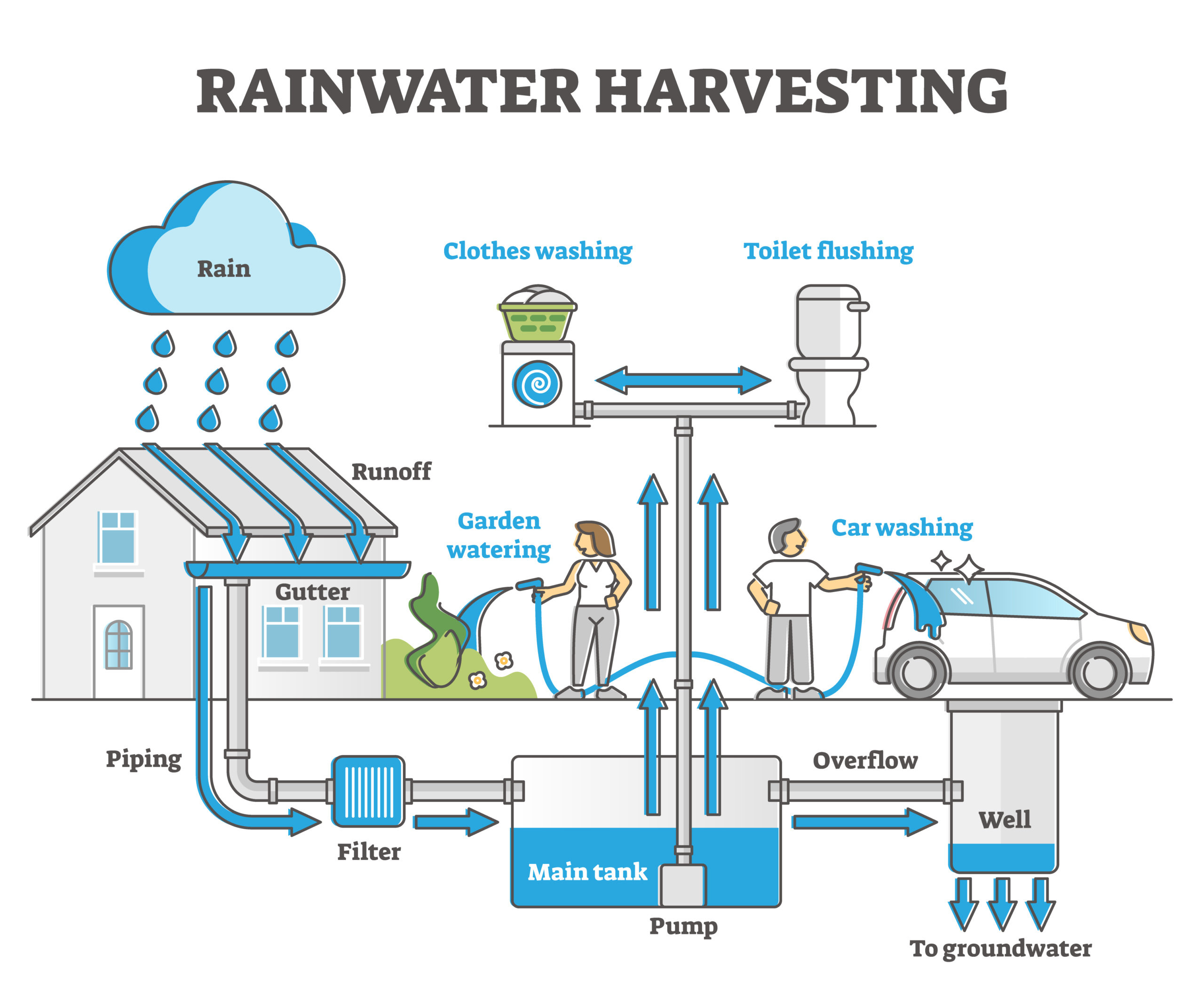
- Catchment Area – Surface where rainwater falls (roof or ground)
- Gutters and Pipes – Channels that collect and transport water
- Filter System – Removes dust, leaves, and debris
- Storage Tank – Stores harvested rainwater
- Recharge Pit – Helps water seep into groundwater
Rainwater Harvesting Diagram
The diagram above represents the basic flow of a rainwater harvesting system. Rainwater falls on the roof, flows through gutters and pipes, passes through filters, and is stored in a tank or directed to a recharge pit.
Rainwater Harvesting Usage Chart
Benefits of Rainwater Harvesting
1. Water Conservation
Rainwater harvesting helps conserve fresh water resources. Instead of wasting rainwater, it can be collected and reused effectively.
2. Reduces Groundwater Depletion
Excessive use of groundwater leads to depletion of water tables. Rainwater harvesting helps recharge groundwater and maintain water balance.
3. Reduces Flooding
Collecting rainwater reduces the amount of water flowing on streets and drains during heavy rainfall, which can reduce urban flooding.
4. Saves Money
Using harvested rainwater for household activities can reduce water bills and dependence on municipal water supply.
5. Environment Friendly
Rainwater harvesting promotes sustainable water management and protects natural ecosystems.
Applications of Rainwater Harvesting
- Household water supply
- Gardening and irrigation
- Agricultural water storage
- Industrial water use
- Groundwater recharge
Conclusion
Rainwater harvesting is an effective and sustainable solution to address water scarcity. By capturing rainwater and storing it for later use, communities can ensure a stable water supply and reduce pressure on natural water resources. Governments and individuals should encourage the adoption of rainwater harvesting systems in homes, schools, industries, and cities. With proper planning and awareness, rainwater harvesting can play a major role in achieving long-term water security.



0 Comments