
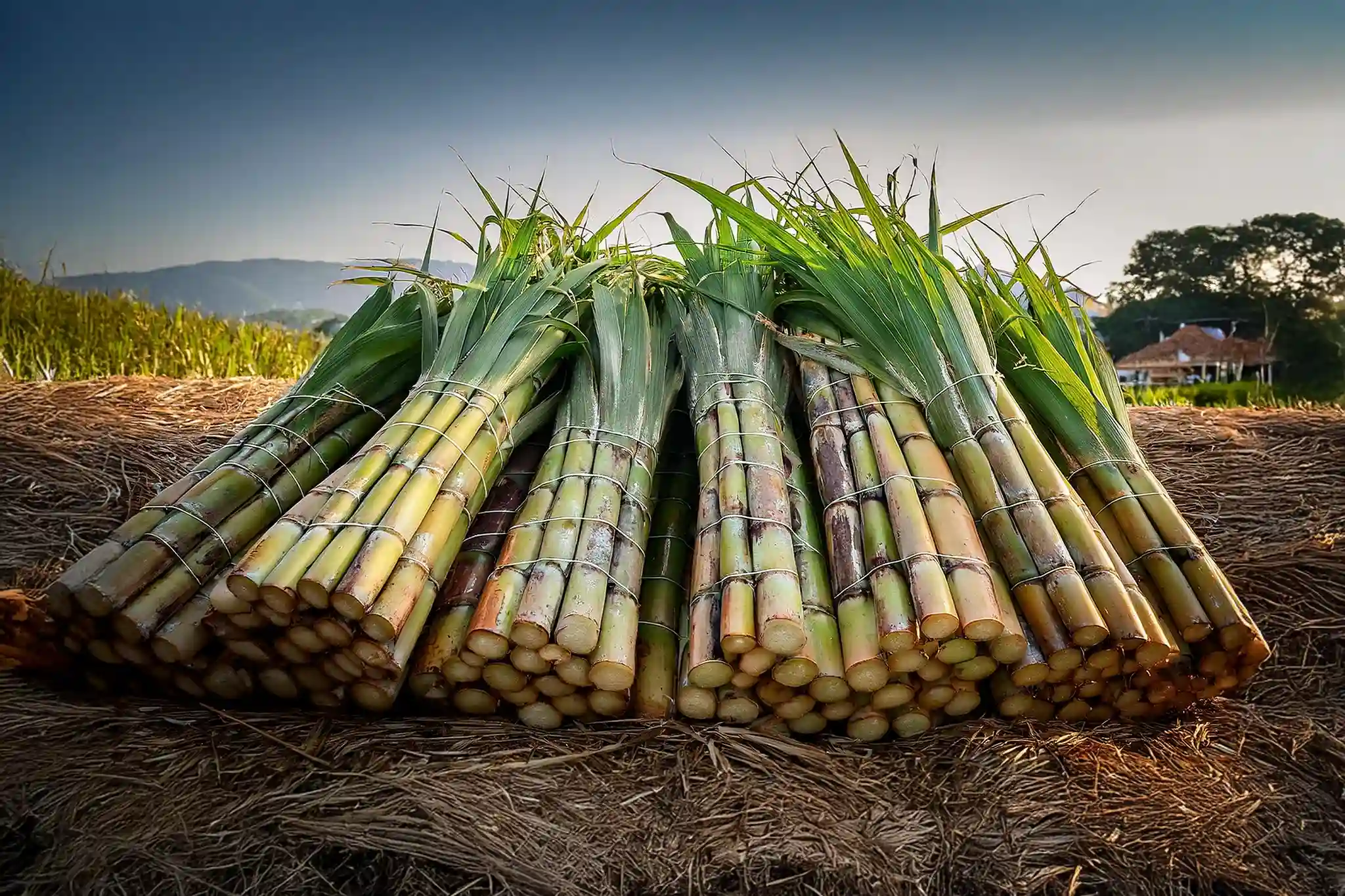
Sugarcane Farming Guide
Complete Lifecycle, Planting Time & Farmer Tips
Introduction / परिचय
Sugarcane (गन्ना) भारत की सबसे महत्वपूर्ण नकदी फसलों में से एक है। यह चीनी, गुड़, एथेनॉल और कई अन्य उत्पाद बनाने के लिए उपयोग की जाती है। भारत में लाखों किसान गन्ने की खेती करके अपनी आय बढ़ाते हैं।
Sugarcane farming requires proper soil preparation, irrigation, and crop care. If farmers follow the correct farming techniques, they can get very high production. This guide explains the complete lifecycle of sugarcane and how farmers can grow it successfully.
Sugarcane Lifecycle Donut Chart
Best Time to Grow Sugarcane
भारत में गन्ने की खेती अलग-अलग मौसम में की जाती है।
- Spring Planting (फरवरी-मार्च) – यह सबसे अच्छा समय माना जाता है।
- Autumn Planting (सितंबर-अक्टूबर) – इससे अधिक उत्पादन मिलता है।
- Tropical Areas – यहाँ साल में लगभग किसी भी समय गन्ना लगाया जा सकता है।
How to Grow Sugarcane / गन्ना कैसे उगाएं
1️⃣ Soil Preparation
Sugarcane grows best in deep fertile soil. The soil should be well drained and rich in organic matter. Before planting, the field should be ploughed 2-3 times. Farmers should also add organic manure or compost to improve soil fertility.
2️⃣ Seed Selection
Healthy sugarcane stems should be selected for planting. Each seed piece should contain 2-3 buds. Disease-free seeds are very important for better yield.
3️⃣ Planting Method
Sugarcane is usually planted in rows. The distance between rows should be around 75-100 cm. Seed pieces are placed in furrows and covered with soil. Proper spacing helps plants grow stronger.
4️⃣ Irrigation
Sugarcane requires a lot of water. Farmers should irrigate the field every 10-15 days depending on soil type and climate. Drip irrigation is becoming popular because it saves water and increases yield.
5️⃣ Fertilizer Management
Fertilizers such as nitrogen, phosphorus and potassium are important for sugarcane growth. Organic manure like cow dung compost also helps improve soil health. Balanced fertilizer use increases crop productivity.
6️⃣ Weed Control
Weeds compete with crops for nutrients. Farmers should remove weeds regularly using manual weeding or herbicides. Keeping the field clean helps the crop grow faster.
Important Tips for Farmers
- Always use disease-free sugarcane seeds.
- Maintain proper irrigation schedule.
- Use organic manure for better soil fertility.
- Monitor pests and diseases regularly.
- Harvest the crop at the right maturity stage.
Harvesting
Sugarcane is usually harvested after 12-14 months. The crop is ready when the leaves start drying and the cane becomes hard. Farmers cut the cane close to the ground to get maximum yield.
Benefits of Sugarcane Farming
Sugarcane farming is very profitable for farmers. It supports many industries such as sugar mills, ethanol production, and jaggery making. With modern farming techniques and irrigation systems, farmers can increase their income significantly.
If farmers follow scientific methods and proper crop care, sugarcane farming can provide stable income and improve rural livelihoods.


0 Comments